

Event Details
COURSE REVIEW
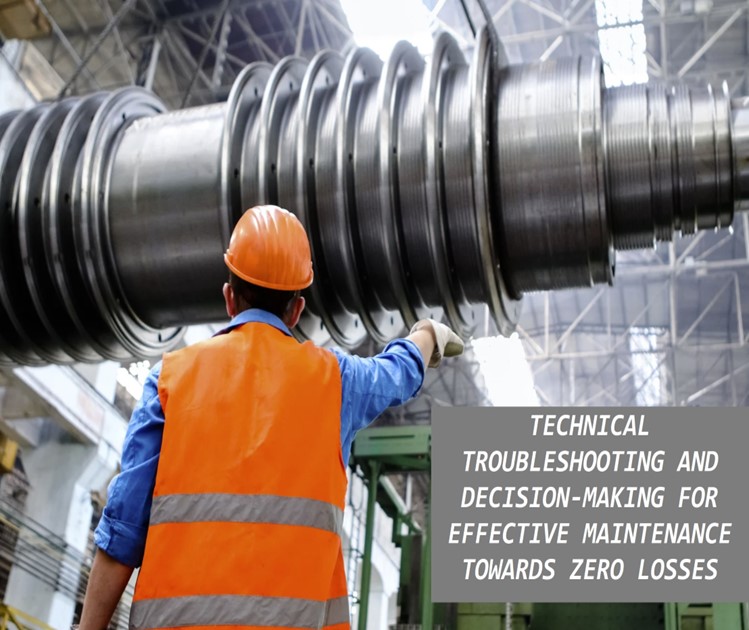 Why do some equipment problems keep recurring even after repairs have been completed? Why can experienced maintenance personnel sometimes spend hours replacing components without identifying the actual cause of failure? Effective troubleshooting requires more than technical experience. It requires a systematic approach to observing symptoms, collecting evidence, isolating possible causes, testing assumptions and making the right maintenance decision. When troubleshooting becomes trial-and-error, organisations may experience unnecessary downtime, repeat failures, higher maintenance costs, lost production and reduced equipment reliability.
This practical 2-day programme is designed to strengthen participants’ technical troubleshooting, failure analysis and maintenance decision-making capabilities. Participants will learn how to distinguish sporadic and chronic failures, understand the P-F Curve and Six Big Losses, define problems clearly, collect relevant evidence, isolate faults and verify root causes before taking corrective action. Practical problem-solving tools including 5 Why Analysis, Fishbone Diagram, Pareto Analysis and Root Cause Analysis will be combined with structured troubleshooting techniques and maintenance decision-making methods. Participants will also explore preventive, predictive and condition-based maintenance approaches together with diagnostic techniques such as vibration and thermography awareness.
The programme further introduces practical improvement techniques including Poka-Yoke, Kaizen and maintenance loss reduction, helping participants move beyond restoring equipment to preventing recurrence. Through technical case studies, exercises and troubleshooting simulations, participants will develop greater confidence in making evidence-based maintenance decisions that support reliability, reduced downtime, improved equipment performance and the pursuit of zero losses.
LEARNING OUTCOMES
√ Apply a structured approach to technical troubleshooting and problem solving.
√ Define equipment problems clearly based on facts and symptoms.
√ Distinguish between sporadic and chronic failures.
√ Understand the Six Big Losses and P-F Curve in maintenance.
√ Collect and evaluate relevant troubleshooting evidence.
√ Isolate faulty components or systems systematically.
√ Apply 5 Why, Fishbone, Pareto and Root Cause Analysis techniques.
√ Verify root causes before implementing corrective actions.
√ Evaluate technical solutions using risk, impact and feasibility considerations.
√ Understand preventive, predictive and condition-based maintenance approaches.
√ Recognise the role of vibration, thermography and condition data in diagnostics.
√ Develop actions to prevent recurrence and support continual equipment improvement.
WHO SHOULD ATTEND
Technical Troubleshooting and Decision Making is a team activity consisting of Managers, Equipment Engineers, Supervisors and Maintenance Technicians (Mechanical, Electrical and instrument disciplines) to participate in it. Also, those who are in operations would like to acquire an understanding of how the quality of the maintenance activities affects their equipment function.
COURSE BENEFIT
This programme strengthens participants’ ability to diagnose technical problems more systematically, reduce unnecessary trial-and-error repairs and make better maintenance decisions. Organisations can benefit from reduced repeat failures, shorter downtime, stronger equipment reliability, improved maintenance effectiveness and better control of production-related losses.
TRAINING METHODOLOGY
Participants will learn by active participation during the workshop through the use of short lectures, practical exercises, group discussions, case studies and presentations.
TRAINING PREPARATION – FOR ONLINE PARTICIPANTS ONLY
As this is a Hybrid Training Programme, participants attending remotely via Zoom are required to have a laptop or computer with a stable internet connection. Please ensure that your camera, microphone and speakers are functioning properly to facilitate effective participation in discussions, exercises and interactive learning activities throughout the training session.
TRAINING DURATION
Full 2 days training (9:00 am-5:00 pm)
PUBLIC PROGRAMME COURSE FEE – 1 DAY (HYBRID TRAINING)
Face-to-Face Training (Penang)
Single Registration – RM1,200.00 nett per participant
Group Registration – RM900.00 nett per participant
Remote Online Training
Single Registration – RM950.00 nett per participant
Group Registration – RM750.00 nett per participant
Group registration applies to a minimum of 4 participants from the same organisation. Participants may combine Face-to-Face and Remote Online attendance to qualify for the group discount. Fees are charged according to each participant’s selected training mode.
(The fee covers training materials, supplementary notes, a detailed training report with assessment and a Certificate of Completion)
OTHER IN-HOUSE & PUBLIC TRAINING ENQUIRIES
Looking for more training programmes or customised learning solutions for your organisation?
We offer a wide range of Public Training Programs and customised In-House Training to meet your organisation’s learning and development needs.
For programme details, training proposals, quotations or further enquiries, please contact us:
Email: [email protected]
Tel: +604-297 6881
WhatsApp: +60 11-1289 6881
For our latest public training schedules and upcoming programmes, please visit:
www.progresslink.com.my/events/
Register with us today! Training fees are eligible for claims under the HRD Corp Claimable Courses scheme.

REGISTER ONLINE

more